Hi everyone! 
Over the past couple of years, I’ve been diving deep into PureScript and its ecosystem. Like many of you, I’ve been absolutely blown away by the elegance of the language and how it solves fundamental architectural problems, especially when bridging the gap between mathematical purity and powerful runtimes like Node, BEAM, or Scheme.
However, I often feel that PureScript deserves way more attention from the mainstream programming world (especially the JS/TS and OOP crowds), who might (sometimes) potentially view this as an ivory tower, even though we’re far past the pedagogical crisis of Haskell in the 2000s (things have greatly improved since, even in Haskell’s ecosystem). I think this is one of the most problematic risks for PureScript. And it would be far too unfair to do nothing and let the web sink into dubious certainties.
To help bridge this gap, I’ve started writing a series of articles on DEV.to. My goal is to use accessible, engaging metaphors to explain why PureScript is such a game-changer for modern software engineering, without overwhelming beginners with category theory jargon right from the start (even though I’d want to, because I love it!).
Here are my latest pieces (and please forgive a few poetic licenses and factual approximations for the sake of the narrative!):
- A quiet rewrite of the Web: PureScript on the rooftops of JavaScript
-
The ultimate polymorphism: PureScript as a universal language (published today)
If you enjoy the read and share this vision of making PureScript more visible, please consider leaving a “like” or a comment on the DEV.to articles.
DEV.to’s algorithm is heavily momentum-based. A few quick likes from this community can trigger the algorithm to push the articles to the front page, reaching thousands of mainstream developers who might otherwise never hear about our “epistemological little friend”! 
Thanks for your time, and a massive thank you to all the contributors here who make this language so amazing to work with every day. I deeply love our community. 
Cheers!
5 Likes
Very cool, thanks for this!
2 Likes
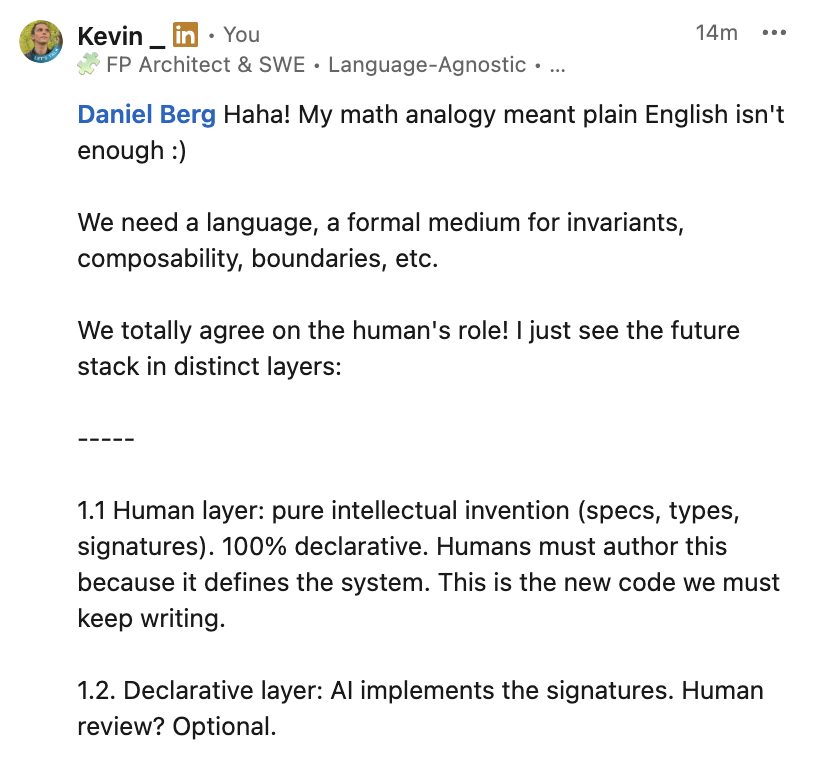
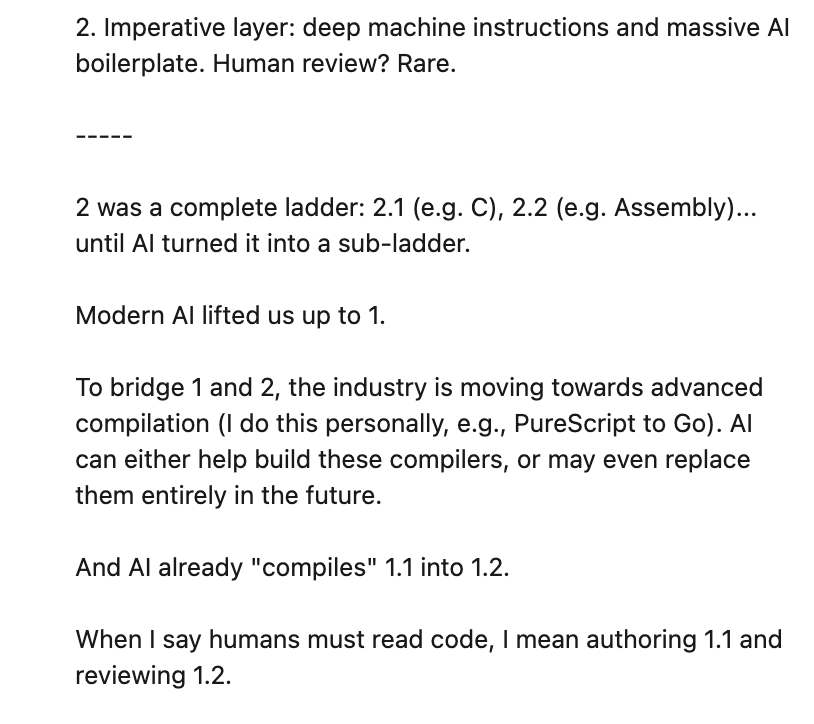
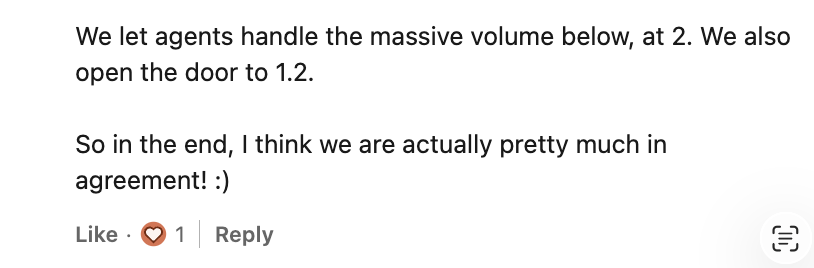
I’m really sorry for posting too much on this forum. I’ll probably post less in the future. I’m going through an intense creative phase right now, driven by this conviction:
(LinkedIn)
Maybe I’m just a PureScript fanatic, but that’s why I truly think it is a good language for the coming years, in the age of AI. It’s mostly just a hunch at this point.
That’s one the directions I’d like to take PureScript with my compilation stories/threads here (and my social network activities). This will help understand why I’m doing this.
1 Like
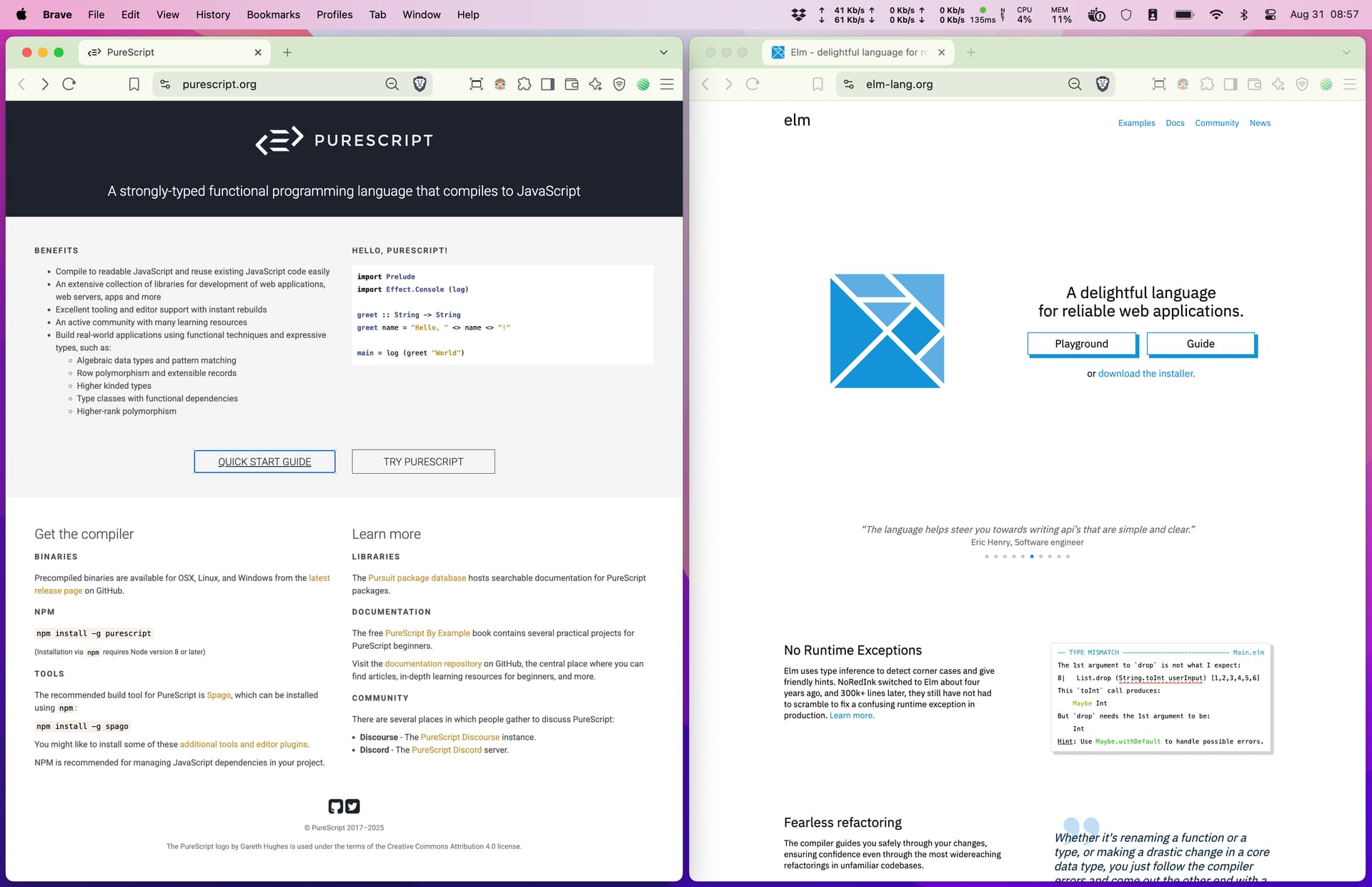
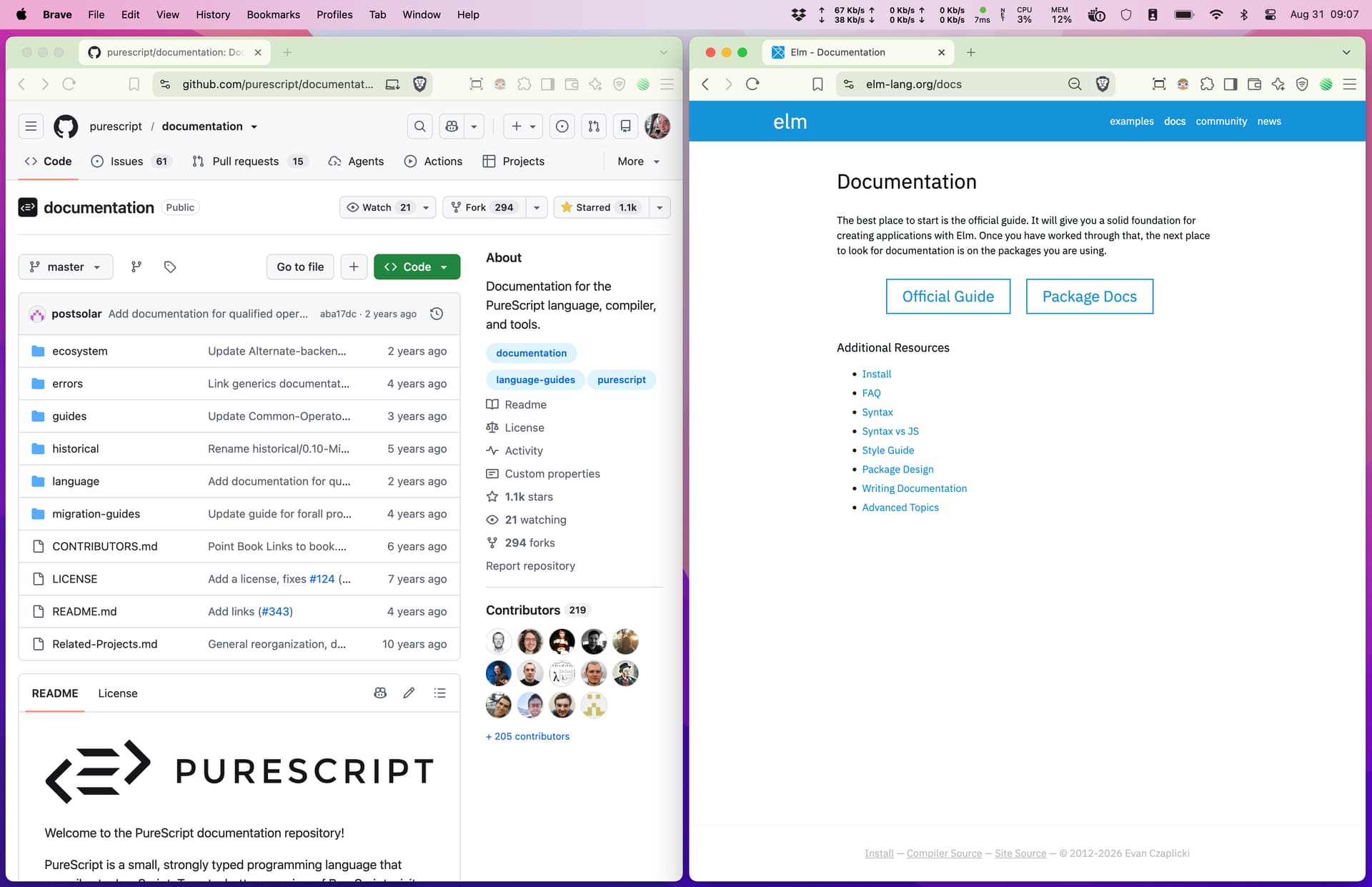
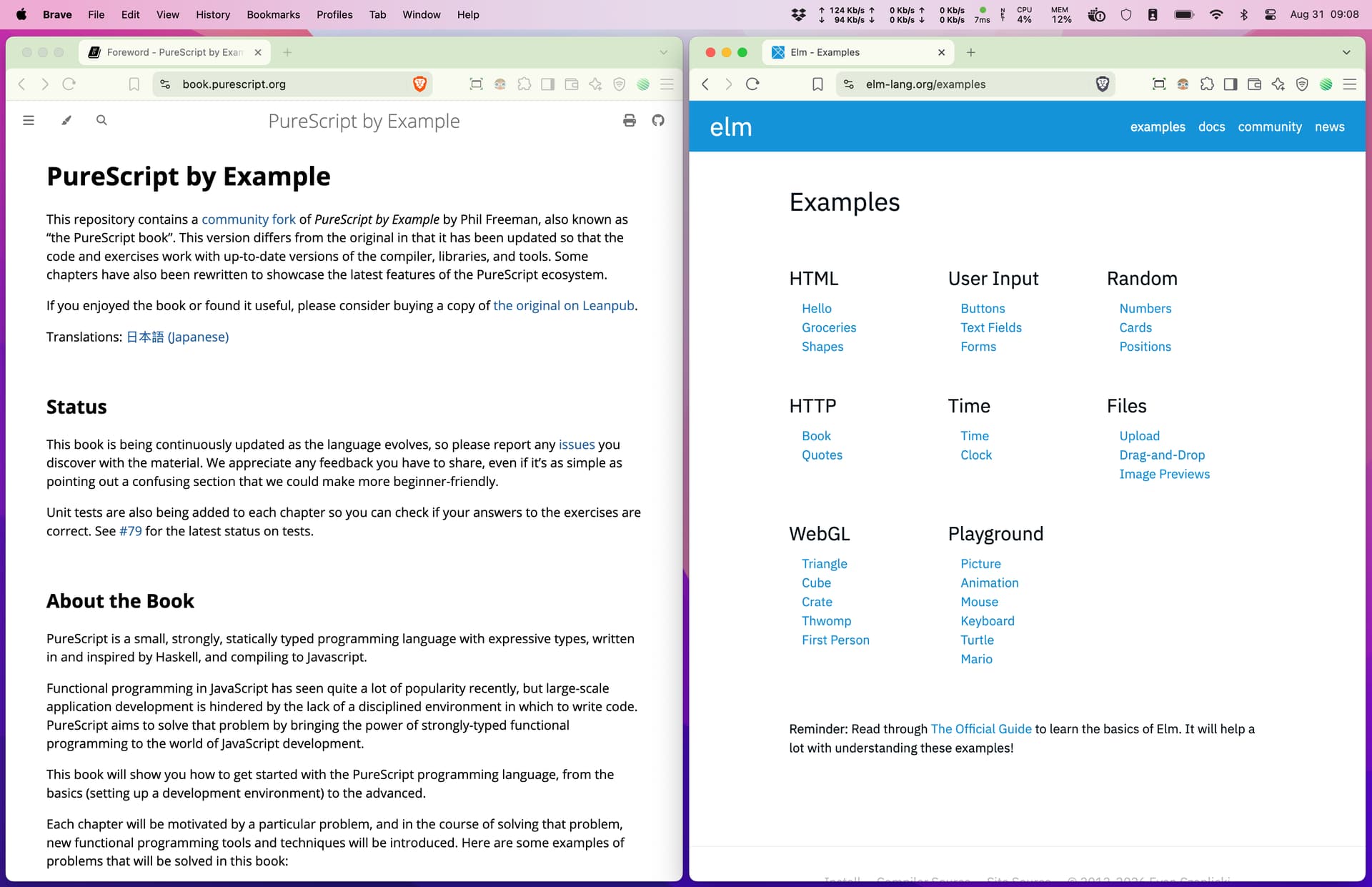
I’m evaluating PureScript. IMO we can compare the website to Elm and learn lessons, how to get
way more attention.
This will require open-mindedness and capability to self-reflect: Elm has been exceedingly successful making itself visible and inviting. What can PureScript learn from it?
Hi @dogweather, and welcome!
I think that’s, above all, a lack of time. PureScript relies entirely on the free time and unpaid work of passionate volunteers.
That being said, I completely agree with your underlying point. We could definitely market it better, and Elm is indeed a fantastic example of onboarding and approachability that we could draw inspiration from.
Actually, your remark highlights a broader challenge. Whenever an open-source project reaches a certain level of maturity, the “all-volunteer” model may hit its limits? Volunteers are building compilers and architectures, but rarely have more time left to spend designing websites, writing beginner tutorials, or doing marketing.
Perhaps the next big step for PureScript isn’t technical, but organizational. Like establishing a PureScript Foundation. This would allow companies using PureScript in production to sponsor the ecosystem, providing a budget to actually pay people to professionalize the “storefront”, polish the documentation, improve the onboarding experience, etc. Languages like Rust, Zig, and Haskell all went through this phase to secure their future and their image.
But I’m relatively new to this community, so I don’t want to speak out of turn or make presumptions. Perhaps some of the more experienced developers here will have interesting insights to share on this topic 
1 Like
Thanks! Note that Elm is just one guy, Evan. 
I agree with your organizational next big step, though. I wonder if that’d help put all the objectives on out on the table, so things don’t fall through the cracks.
1 Like